
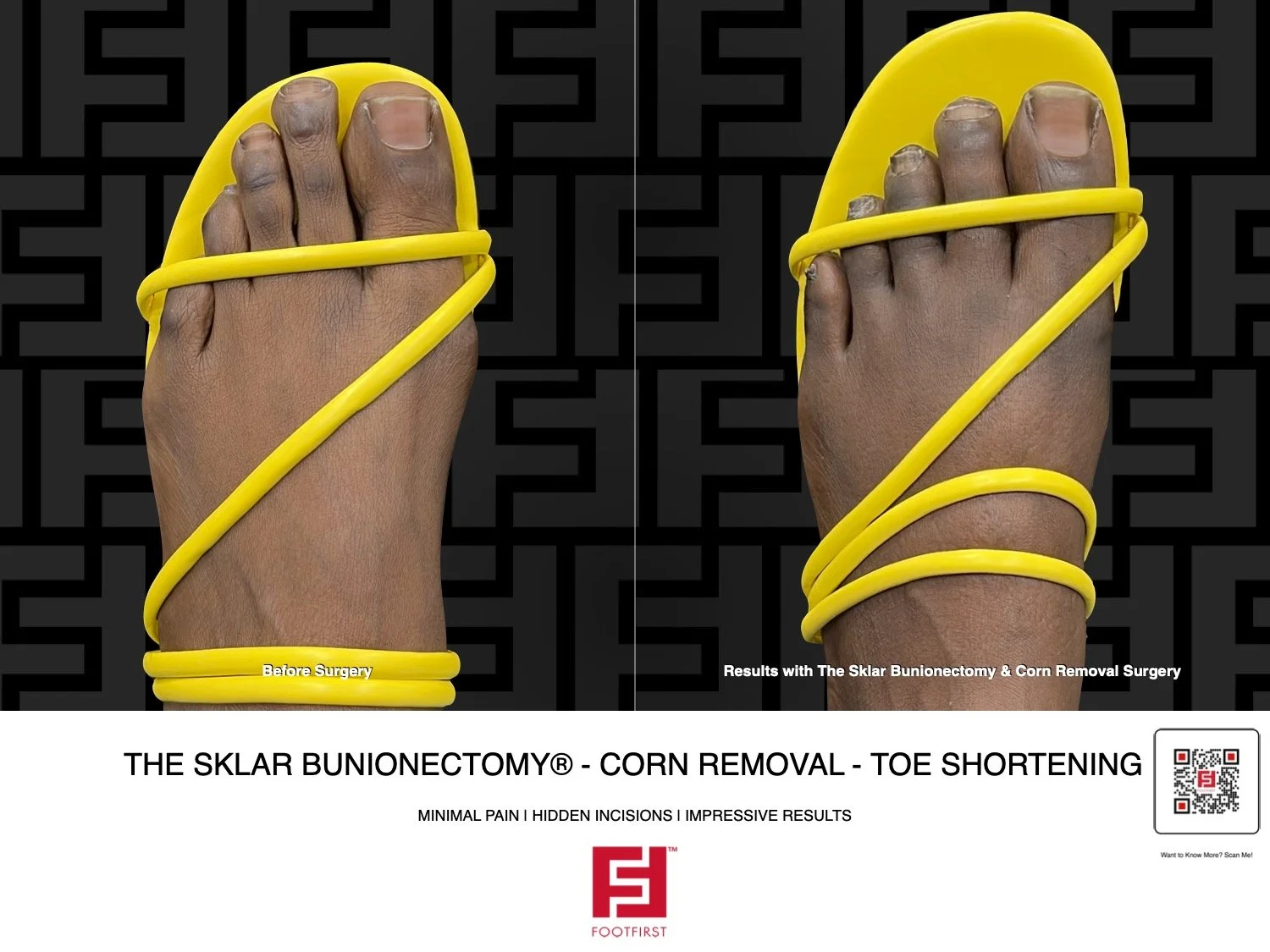
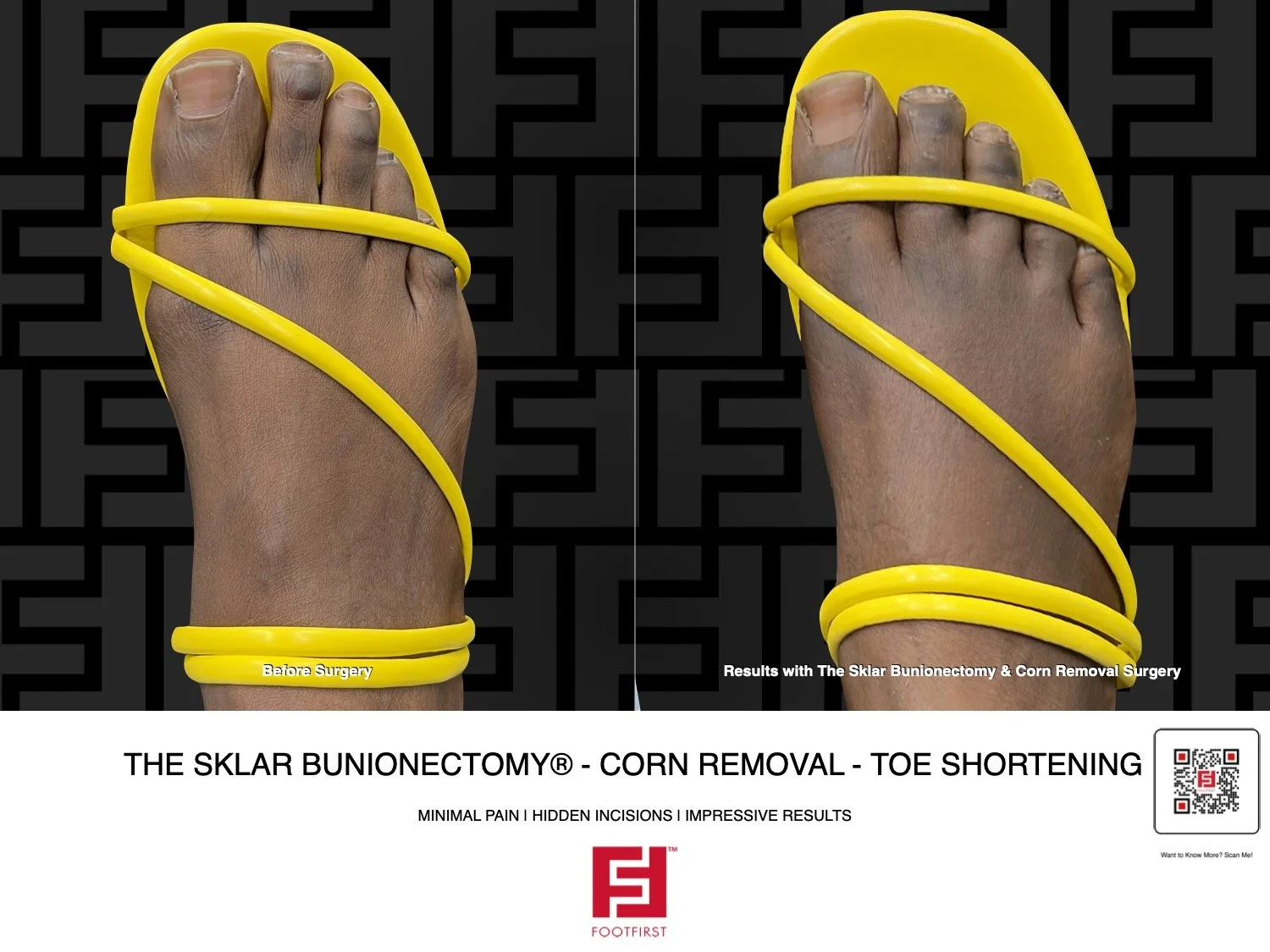

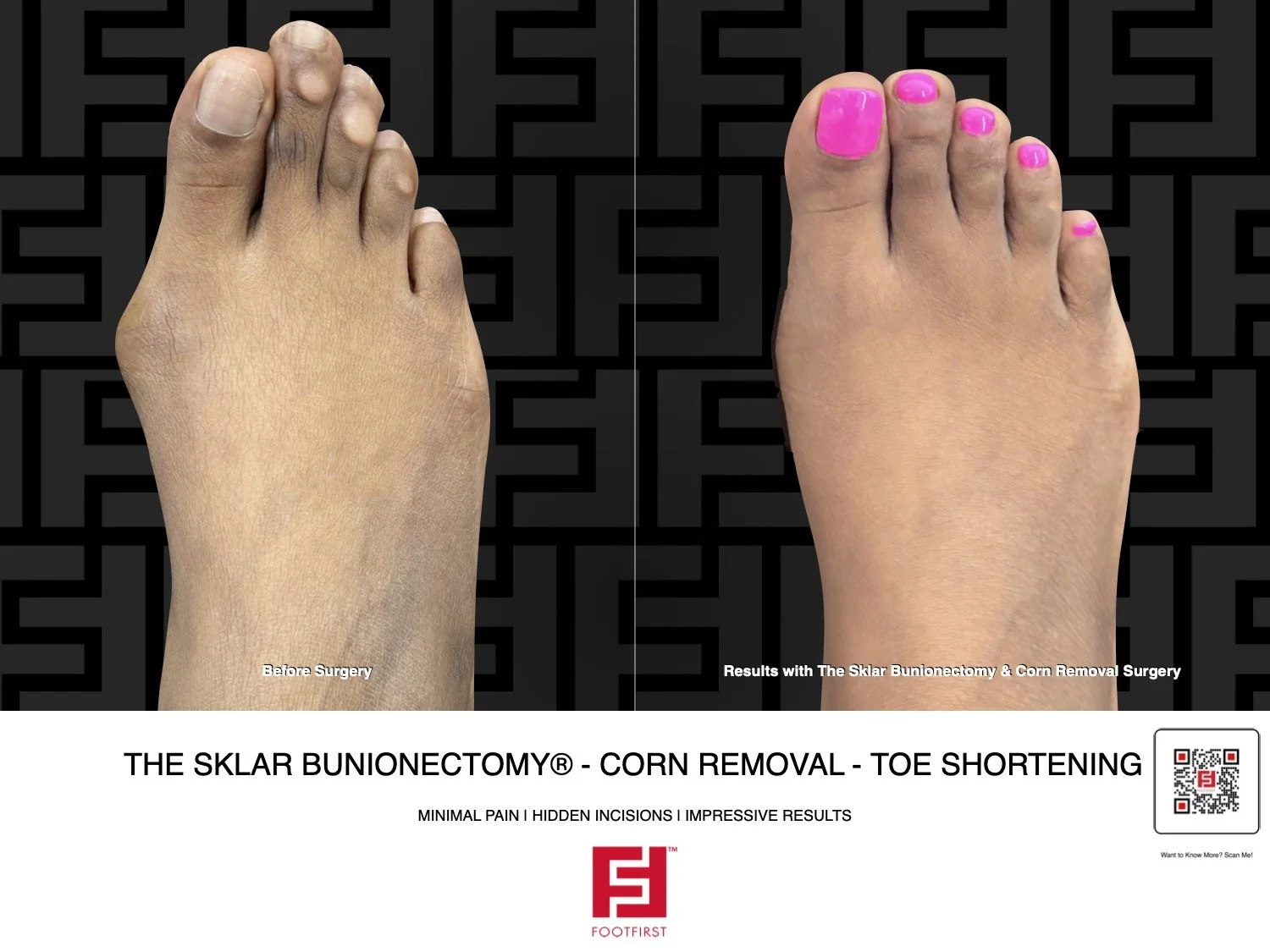


Corn Removal Surgery
Treat the Cause - Not Just the Corn
If you've trimmed, padded, filed, or medicated the same painful corn over and over again, you're treating the symptom - not the cause. At Foot First Podiatry, we believe lasting relief comes from correcting the underlying source of pressure, not simply removing the corn itself.
Corns: Causes, Advanced Treatment, and What to Expect
At Foot First Podiatry, we understand how frustrating, unsightly, and painful corns can be - especially when they keep coming back despite countless over-the-counter remedies. Corns are not just a surface nuisance; they are usually a direct result of underlying issues like hammertoes, bony prominences, or localized pressure points.
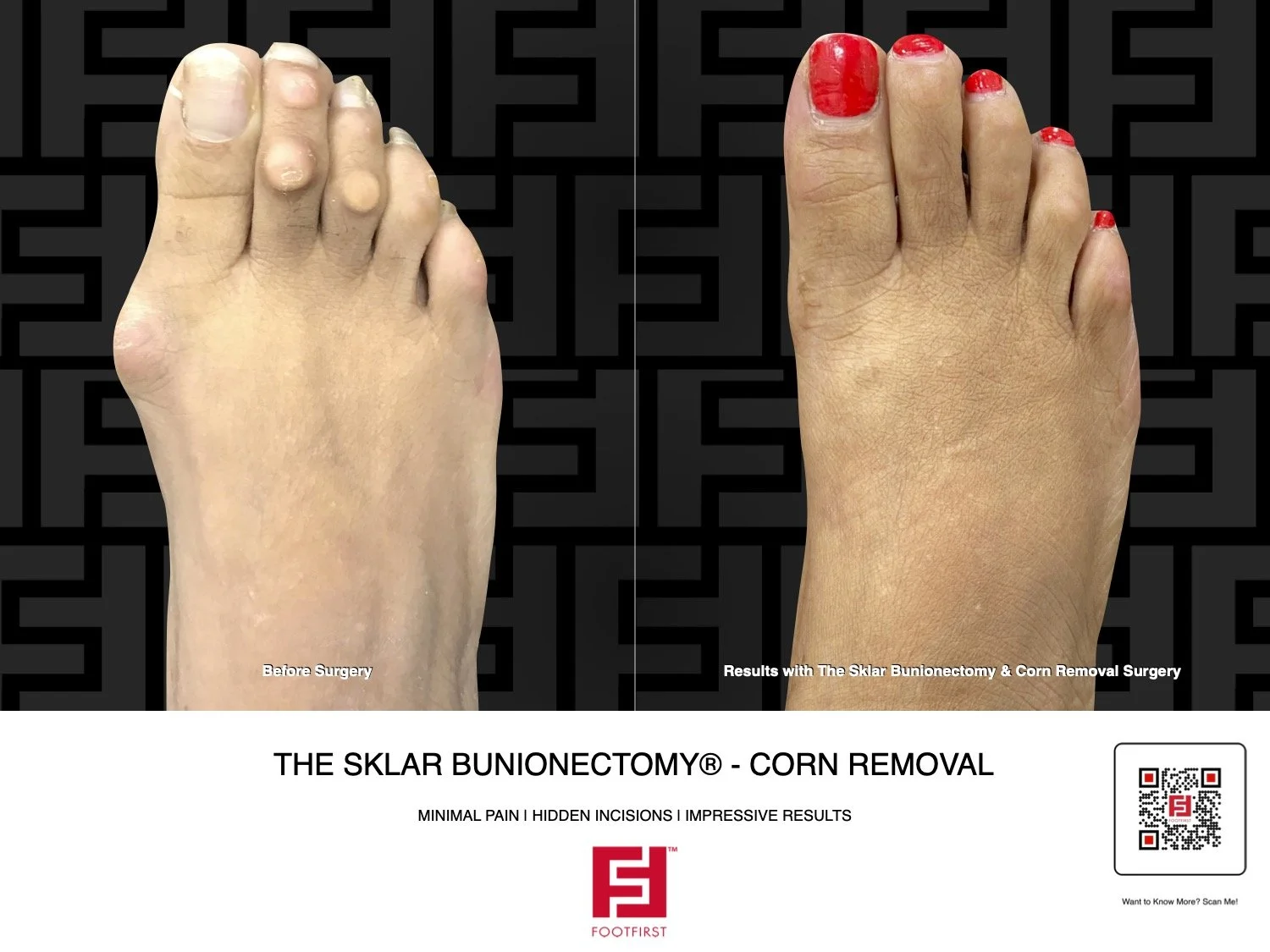
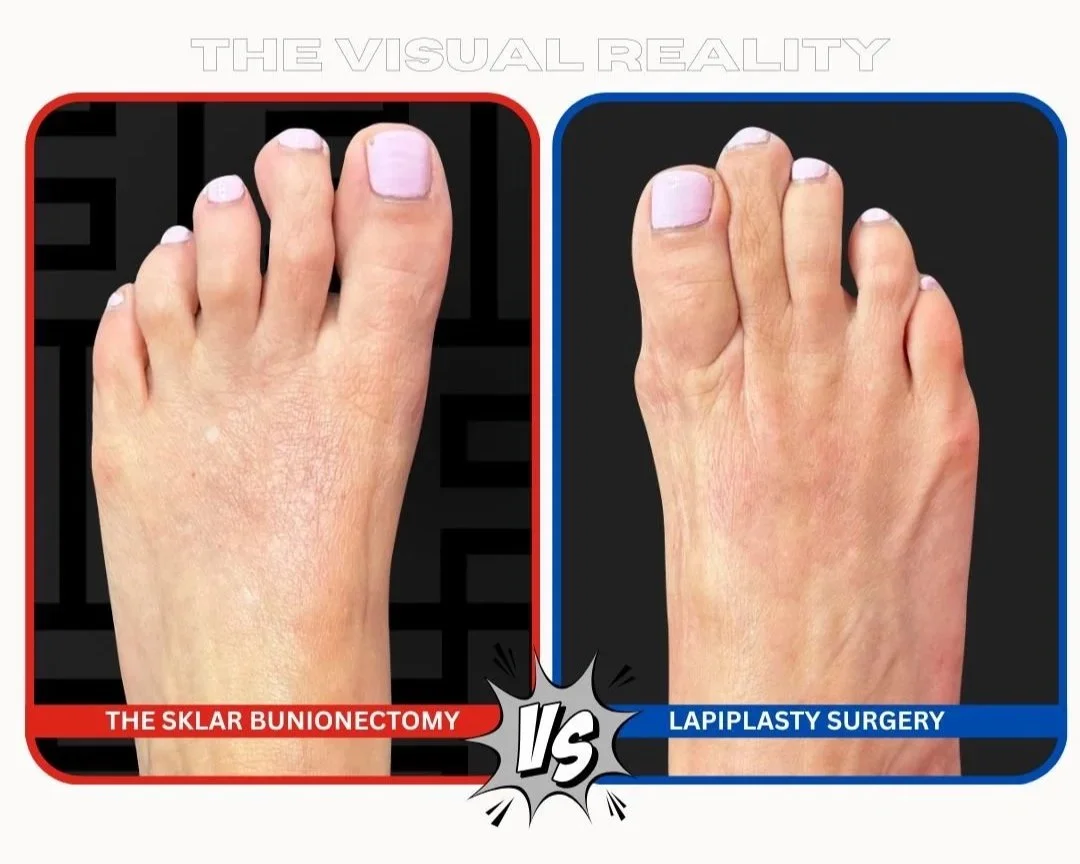
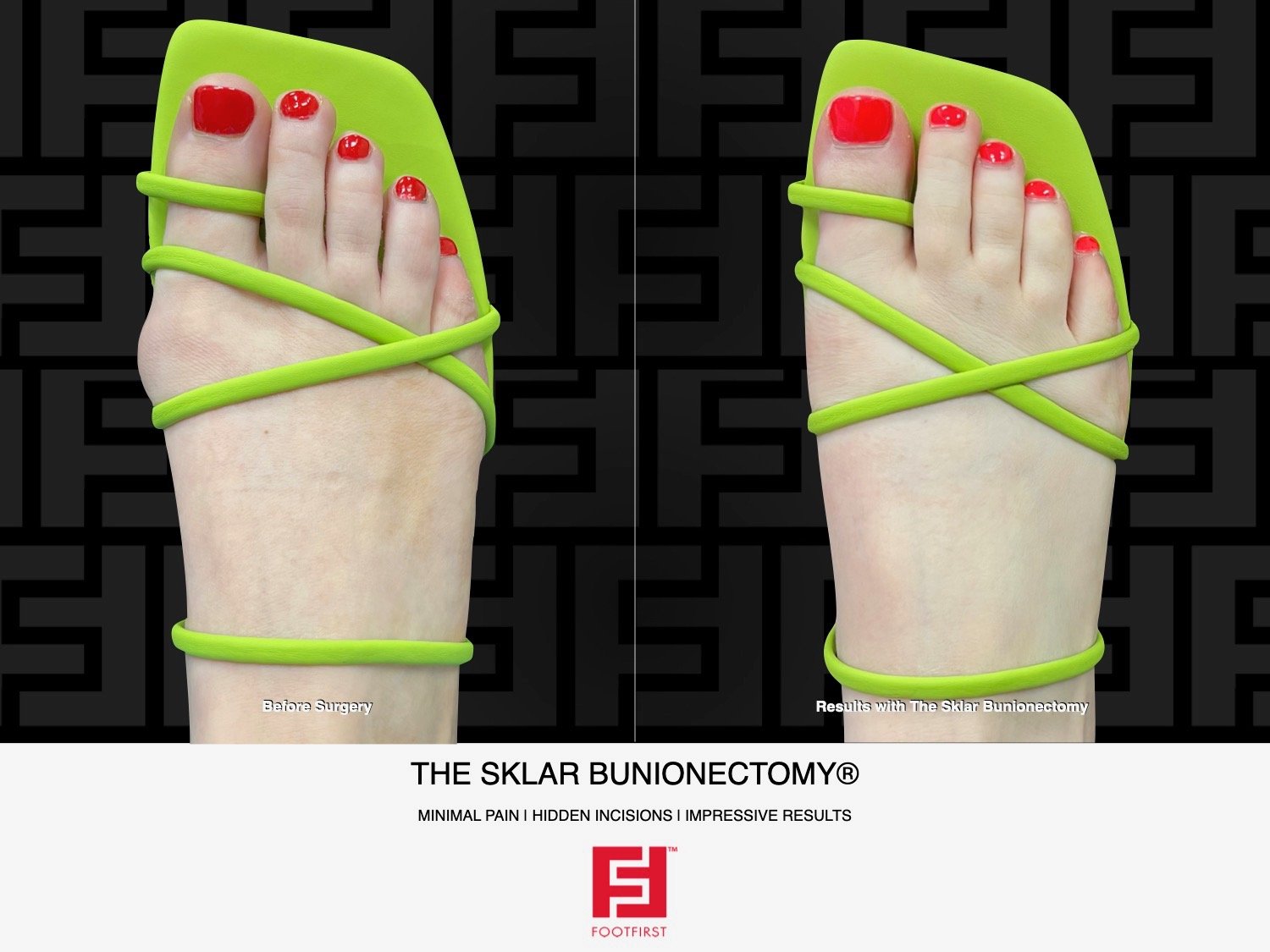
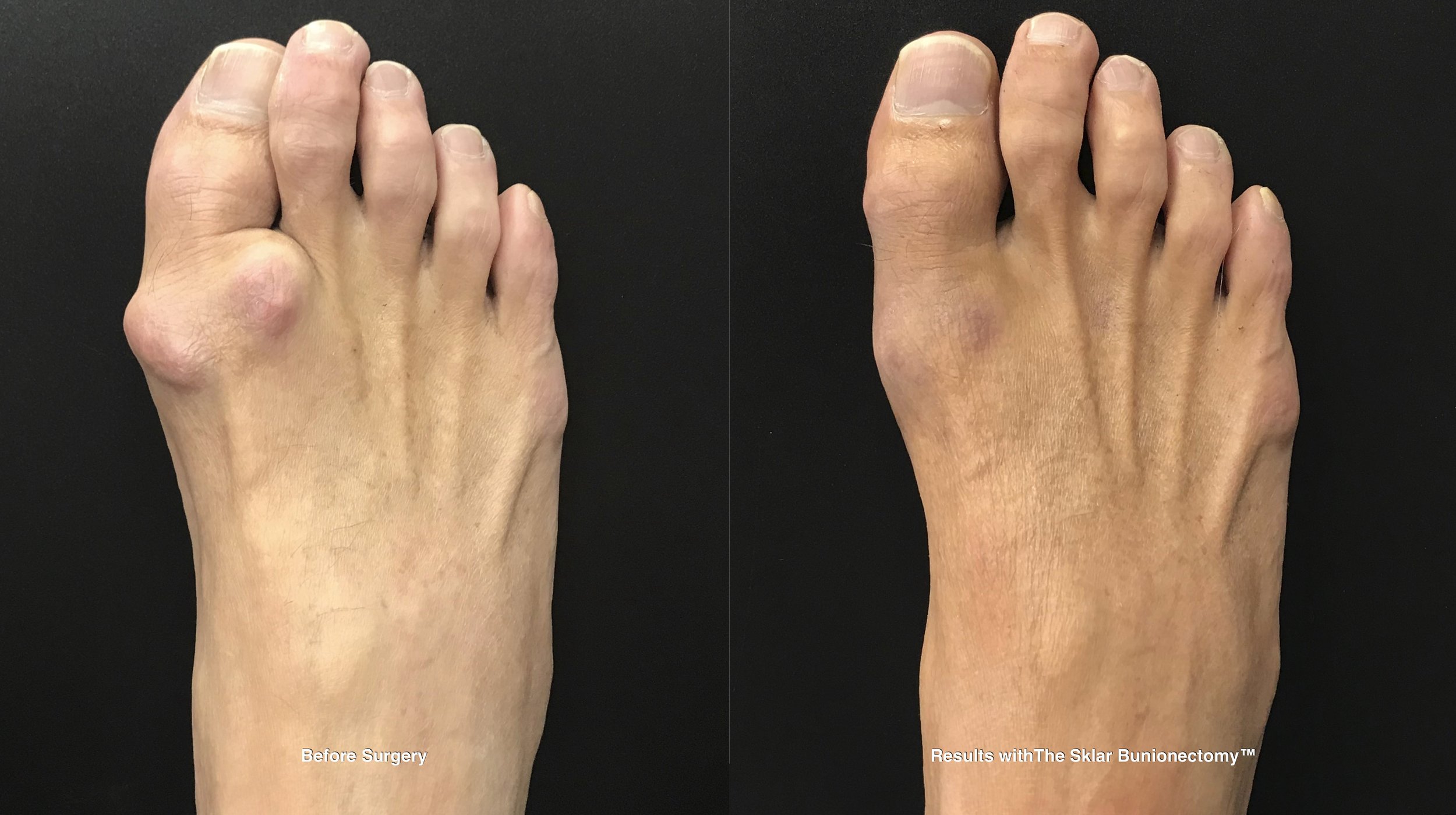
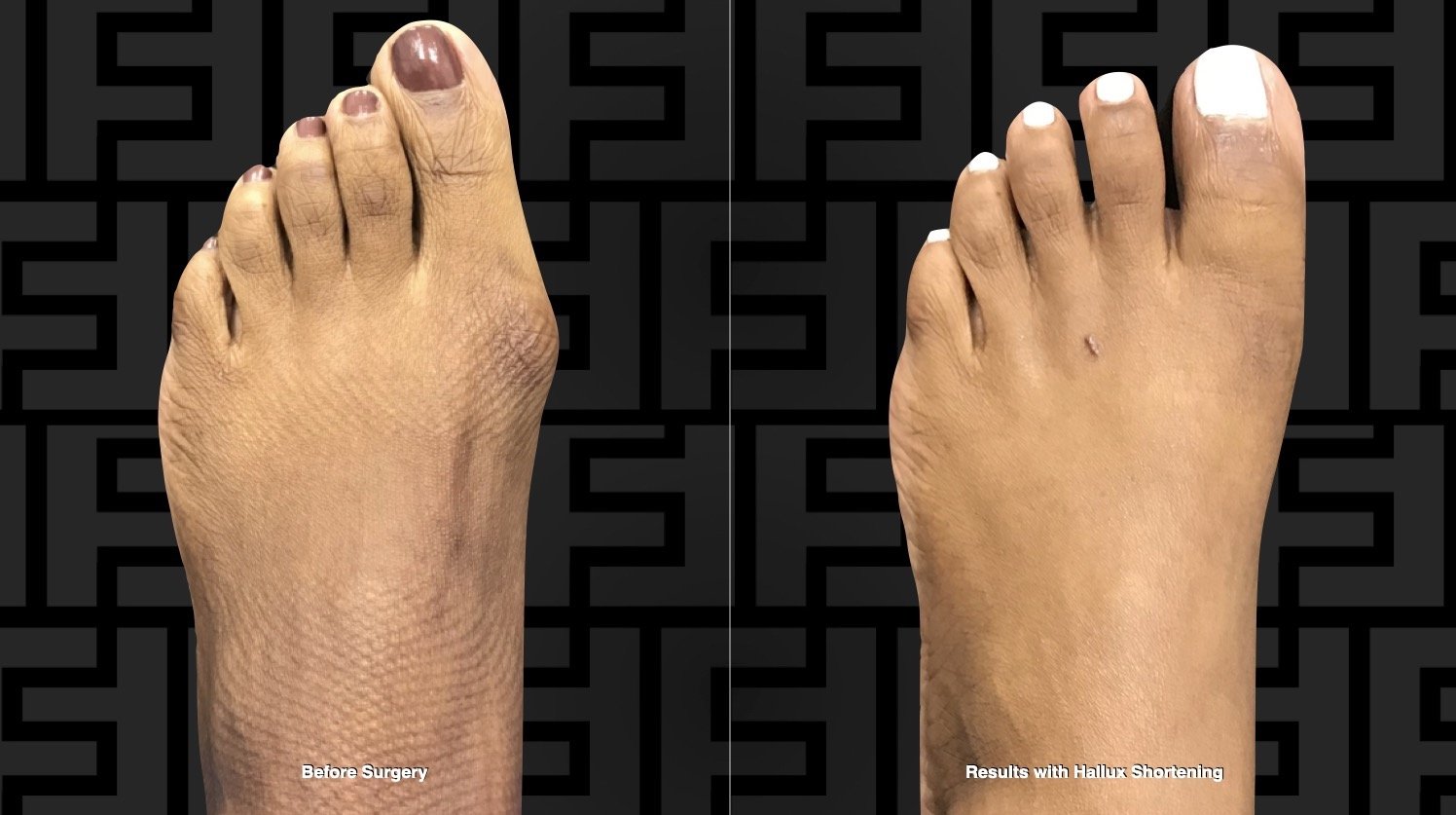
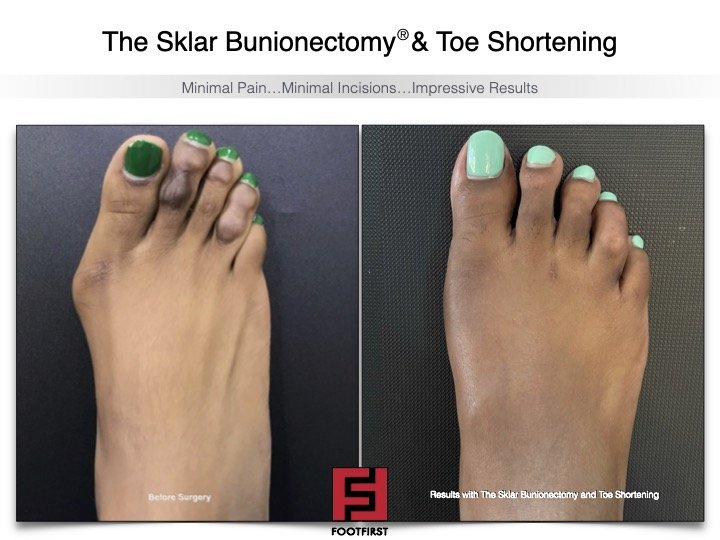
Before & After | Correcting the structural deformities responsible for painful corns while restoring a more natural-looking foot. | Foot First Podiatry
A Corrective Approach for Lasting Results
That is why we do not simply shave or cut out the corn, which can leave unsightly scars and fails to fix the real issue. Instead, we correct the structural source of the friction and pressure. Once the underlying biomechanical problem is resolved, the skin heals naturally, and the corn fades away for good.
Just like our proprietary Sklar Bunionectomy and toe shortening procedures, our corn removal technique is minimally invasive, allows for immediate weight-bearing, and prioritizes the natural beauty and aesthetics of your foot. We take special care to place incisions in discreet, hidden areas so you are left with virtually no visible scarring.
Accelerating Recovery with Post-Operative PRP Therapy
To further elevate your healing experience, we incorporate Platelet-Rich Plasma (PRP) therapy post-operatively. By utilizing the natural growth factors present in your own blood, PRP therapy accelerates tissue regeneration, reduces post-procedure inflammation, and optimizes cosmetic skin healing. This biological boost helps ensure your recovery is as fast, smooth, and seamless as possible.
Real Talk: Structural Stability and Your Aesthetic Evolution
Let’s be completely honest: we aren't perfect, but we are really good at what we do. Our results speak for themselves, but a refined aesthetic transformation doesn't happen overnight. Achieving high-end cosmetic results is a partnership between our exclusive Foot First technique and the patient’s own genetic healing power - guided by time, precision, and patience.
Achieving the full cosmetic result is a gradual process that takes time to fully settle. While our internal fixation provides the stability needed for immediate weight-bearing, without the burden of heavy casts or crutches, most patients are back in a gym shoe in approximately three weeks. The visual transformation, however, continues to refine over time and requires patience.
You should anticipate an UGLY transition period of approximately four months - a phase of "aesthetic evolution" - before the beauty of your results begins to emerge. As swelling and discoloration naturally subsides, scar tissue resorbs, and bone remodels.. Most patients see significant cosmetic improvement around four months, with full results continuing to mature over the next 6 to 12 months.
For those who prioritize a daily fitness routine, navigating recovery requires a smart approach to working out:
Aerobic Fitness: To prevent increased swelling and protect the internal healing of the bone, patients must refrain from aerobic exercise for approximately 8 to 10 weeks.
Targeted Upper Body & Core: You don't have to abandon the gym entirely. As early as one week after surgery, you can often safely return to workouts that focus on your shoulders, arms, legs, and core, allowing you to stay active while protecting your recovery.
Frequently Asked Questions
Q: What is the recovery time for minimally invasive corn removal with Platelet-Rich Plasm (PRP)?
A: THE "AESTHETIC EVOLUTION" TIMELINE
You should anticipate a transition period of approximately four months - a phase of "aesthetic evolution" - before the ultimate beauty of your results begins to emerge:
The First 4 Months: As temporary swelling and minor discoloration naturally subside, your own genetic healing power guides the recovery, revealing an increasingly refined silhouette. Most patients see significant cosmetic improvement around four months.
6 to 12 Months: Full results continue to mature and settle over the long term, leaving you with a natural-looking foot.
Daily Life Integration: With our internal fixation providing the stability needed for immediate weight-bearing, your life isn't put completely on hold. You won't be trapped in a heavy cast or struggling with crutches, and most patients are comfortably wearing a standard gym shoe by week 3.
Adding post-operative PRP therapy accelerates tissue regeneration and minimizes swelling, promoting faster healing and more refined cosmetic results than traditional surgery. Full tissue recovery depends on following your post-operative instructions, including your shoe guidance.
Q: Is PRP therapy safe?
A: Yes, PRP (Platelet-Rich Plasma) therapy is exceptionally safe because it uses your body's own biological material. A small sample of your blood is processed to concentrate natural platelets and growth factors, eliminating the risk of allergic reactions or foreign-body rejection.
Q: Will the procedure be painful?
A: Patient comfort is our top priority. The procedure can be performed under local anesthesia or twilight sedation to help provide a comfortable experience and minimize discomfort during treatment. Post-operative discomfort is typically mild and easily managed, and PRP therapy further aids in reducing post-procedure inflammation naturally.
For a closer look at the recovery process, read our The Surgical Patient's Experience to see one patient's journey from consultation through one year after surgery.
The foot first difference
At Foot First Podiatry, our goal is more than simply removing a painful corn - we are committed to correcting the underlying cause of the problem. By combining advanced surgical techniques, immediate weight-bearing, hidden cosmetic incisions whenever possible, and regenerative therapies like Platelet-Rich Plasma (PRP), we strive to restore both comfort and confidence.
Every patient deserves a foot that not only feels better, but looks natural. Our focus is on long-term correction, refined cosmetic results, and helping you return to your normal activities with as little disruption as possible.
READY TO LEARN MORE?
If you're considering corn removal surgery, the first step is a consultation with the doctors at Foot First Podiatry. We'll evaluate your feet, identify the underlying cause of your painful corn, answer your questions, and determine whether surgery is the right treatment option for you.
Whether you're seeking lasting pain relief, improved function, or a more natural cosmetic result, we'll help you understand your options and develop a personalized treatment plan.
Patients travel to Foot First Podiatry from throughout Illinois, the Midwest, and beyond for our advanced surgical approach to foot care. If you're traveling from out of town, our team can help guide you through your consultation, surgical planning, and recovery process.
When you're ready, simply scroll down to request your consultation. We look forward to helping you take the next step toward lasting relief.
QUESTIONS ABOUT CORN SURGERY?
To learn more about Corn Removal and other treatments, check out our blog





Request a Consultation
Request a consultation by completing the form below, and we will contact you for scheduling.
We respond promptly to consultation requests, including evenings and weekends. If you don't see our reply in your inbox, please check your spam or junk folder.
Prefer to speak with us directly? Call (847) 352-9221.