
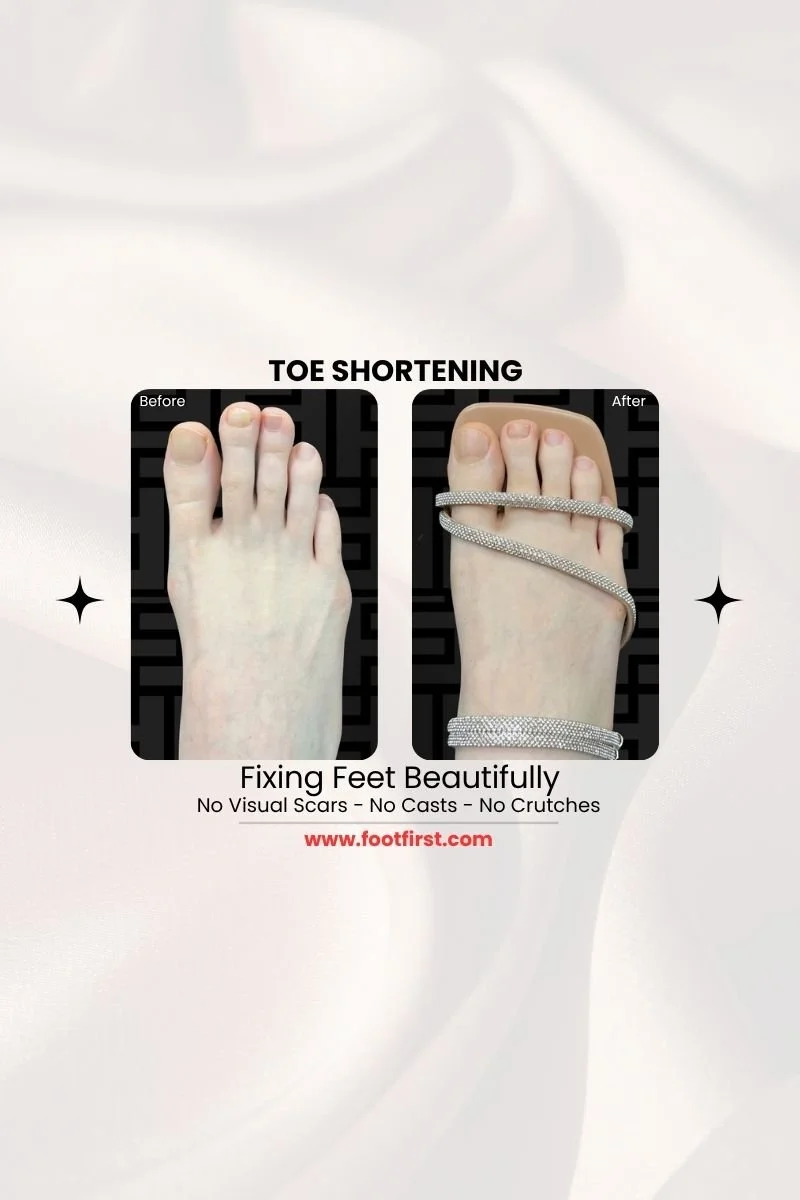
LET'S DEMYSTIFY TOE SHORTENING SURGERY
When people think about foot surgery, bunions and hammertoes usually steal the spotlight. However, in our clinics, another common concern is disproportionately long toes.
Whether it is a single second toe that extends far beyond the big toe or multiple that crowd the shoe box, long toes can cause a surprising amount of physical distress and daily frustration.
Let’s look deeper at why patients choose to undergo toe shortening procedures to find relief and restore balance.
1. Chronic Ball-of-the-Foot Pain (Metatarsalgia)
Biomechanics dictate how pressure is distributed across the forefoot.
When a toe - frequently the second digit - is structurally longer than the others, it may be associated with an abnormal amount of downward pressure during the propulsive phase of walking.
Over time, this concentrated pressure can lead to painful inflammation of the joint capsule (capsulitis). This can manifest as symptoms that feels as though the ball of the foot is swollen, or that there is something in the shoe.
Patients often develop painful calluses on the ball of the foot or at the tip of the toe because it constantly jams against the end or bottom of the shoe.
The second toe may “pop up” and sit higher, or cross over other toes, particularly when instability or injury of the plantar plate develops.
2. Friction, Corns, and Hammertoe Contractures
Inside a shoe, a long toe has nowhere to go. It is forced to bend or curl to fit inside the toe box, frequently resulting in a rigid hammertoe.
Constant rubbing against the top or tip of the shoe may cause painful, recurring corns and, in some cases, skin breakdown or ulcerations.
Conservative measures, such as toe pads, silicone sleeves, or extra-depth shoes, may provided temporary relief but do not address the root structural cause: the bone is simply too long for the space allotted.
The hammertoe may be flexible initially but can become increasingly rigid and permanent over time.
3. Footwear Frustration and Limitations
Fashion and footwear choices can become severely limited when dealing with a toe-length discrepancy. Patients frequently report frustration trying to find closed-toe shoes, athletic sneakers, or fashion footwear that accommodate the longer digit without causing discomfort by the end of the day. Some patients attempt to buy bigger shoes to accommodate their long toes only to find that they slip out of them from being too large for the rest of their foot.
4. Aesthetic Confidence
While the functional concerns and pain-relief are important, aesthetics matter too. Many patients feel self-conscious about the appearance of their feet when wearing sandals, going barefoot at the beach, or participating in yoga and Pilates. Achieving natural looking toe proportions can dramatically boost a patient's self-confidence.
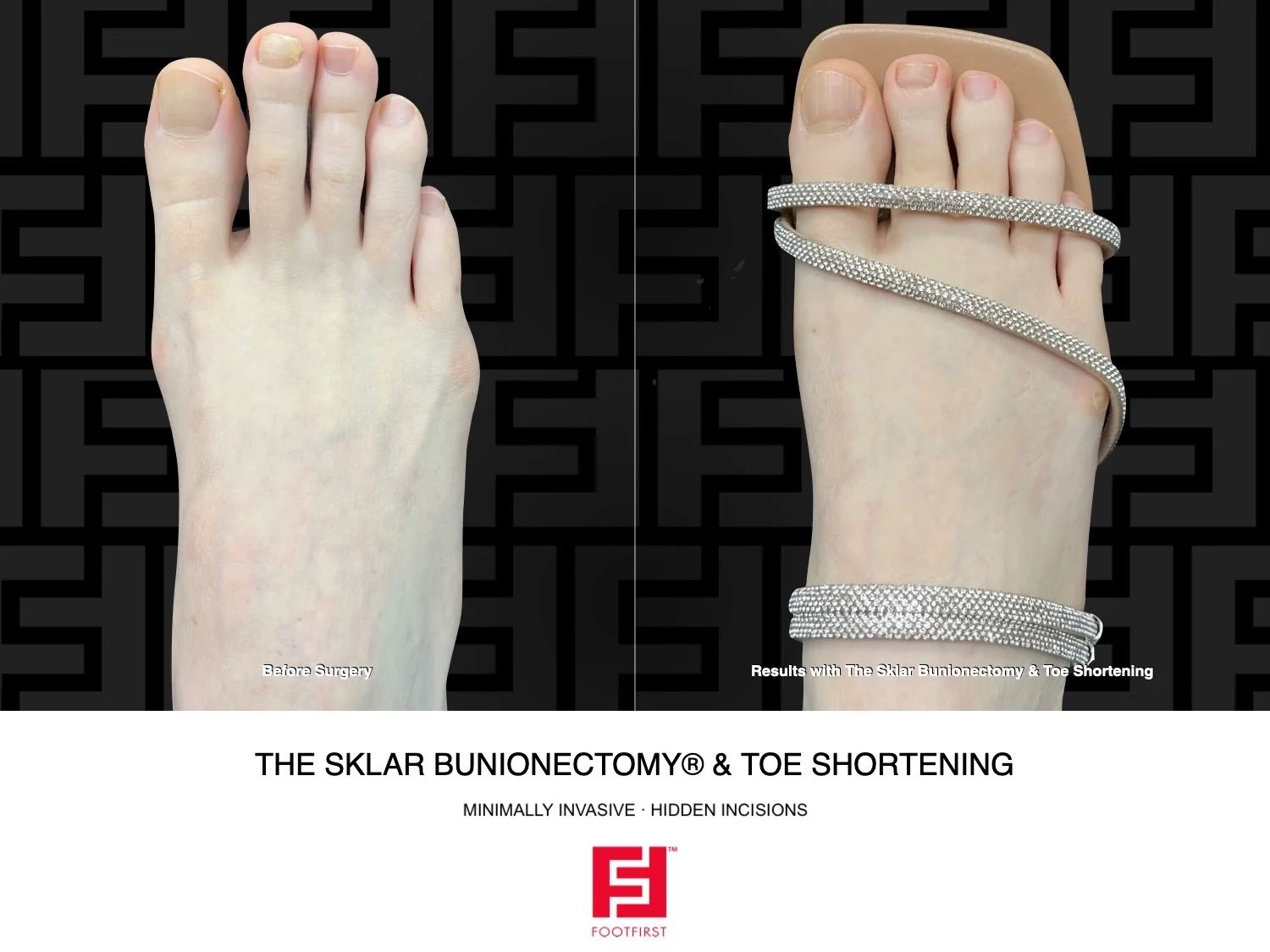
Toe Shortening Before & After | Foot First Podiatry
Demystifying the Procedure
Many patients assume toe shortening is a scary or overly complex ordeal. Others are surprised to learn that toe shortening is even possible. At Foot First Podiatry, our surgical techniques have refined the process and have helped bring awareness to an issue that so many patients experience.
PRECISION CORRECTION
The procedure involves removing a small segment of bone to shorten the toes, allowing the soft tissues to relax and realign.
STABLE FIXATION
Carefully placed pins are positioned beneath the skin to maintain proper bone alignment and provide stability throughout the healing process. Taping also helps maintain the length.
RECOVERY
Patients typically wear a surgical shoe for the first 2–3 weeks to protect the foot and support proper healing. They may then transition into a supportive gym shoe as healing progresses. The pins in the toes are removed in between 8-12 weeks.
Toe Movement & Flexibility After Surgery | Foot First Podiatry
Will my toes still move?
A very common question patients ask is whether shortening the bone and stabilizing the toe means it will be permanently fused and unable to move.
Bone healing and joint movement are not mutually exclusive. Depending on the specific condition of the toe and the correction required, normal joint mechanics and movement can be preserved so your foot continues to flex and function naturally. Most patients’ toes are able to move up and down after surgery, however curling may be restricted.
Will there be visible scars?
Rather than placing the incision directly on top of the toe, where scars may remain visible, at Foot First Podiatry we strategically place our incisions underneath or between the toes. This allows scars to heal hidden from view, preserving a smooth and natural appearance.
Can I run again?
Most patients are able to return to the activities they once enjoyed before having surgery. Once the bone has fully healed and the foot has regained its baseline strength, patients are able to return to their active lifestyles, including running and high-impact exercise.
Can I wear cute heels?
By correcting the structural length discrepancy and eliminating crowded toes, most patients are able to wear fashionable shoes and heels without the constant pinching and pain they experienced before surgery.
Is Toe Shortening Right for You?
If you are tired of dealing with chronic forefoot pressure, painful corns, shoe-fitting struggles, or cosmetic dissatisfaction due to a long toe, a professional evaluation is the best first step. Understanding your unique anatomy and symptoms allows us to tailor a surgical plan that restores comfort and confidence to your step.
For further educational articles and details on forefoot anatomy and surgical procedures, you are welcome to visit footfirst.com.