

If you're considering toe shortening surgery, you probably have questions about how the procedure works, recovery, scars, internal fixation, toe movement, and what your feet may look like afterward.
At Foot First Podiatry, toe shortening is about more than simply making a toe shorter. We evaluate the length, alignment, function, and overall proportion of the forefoot to create a treatment plan designed around both structural correction and aesthetic balance.
Here are answers to some of the questions patients ask us most often about toe shortening surgery.
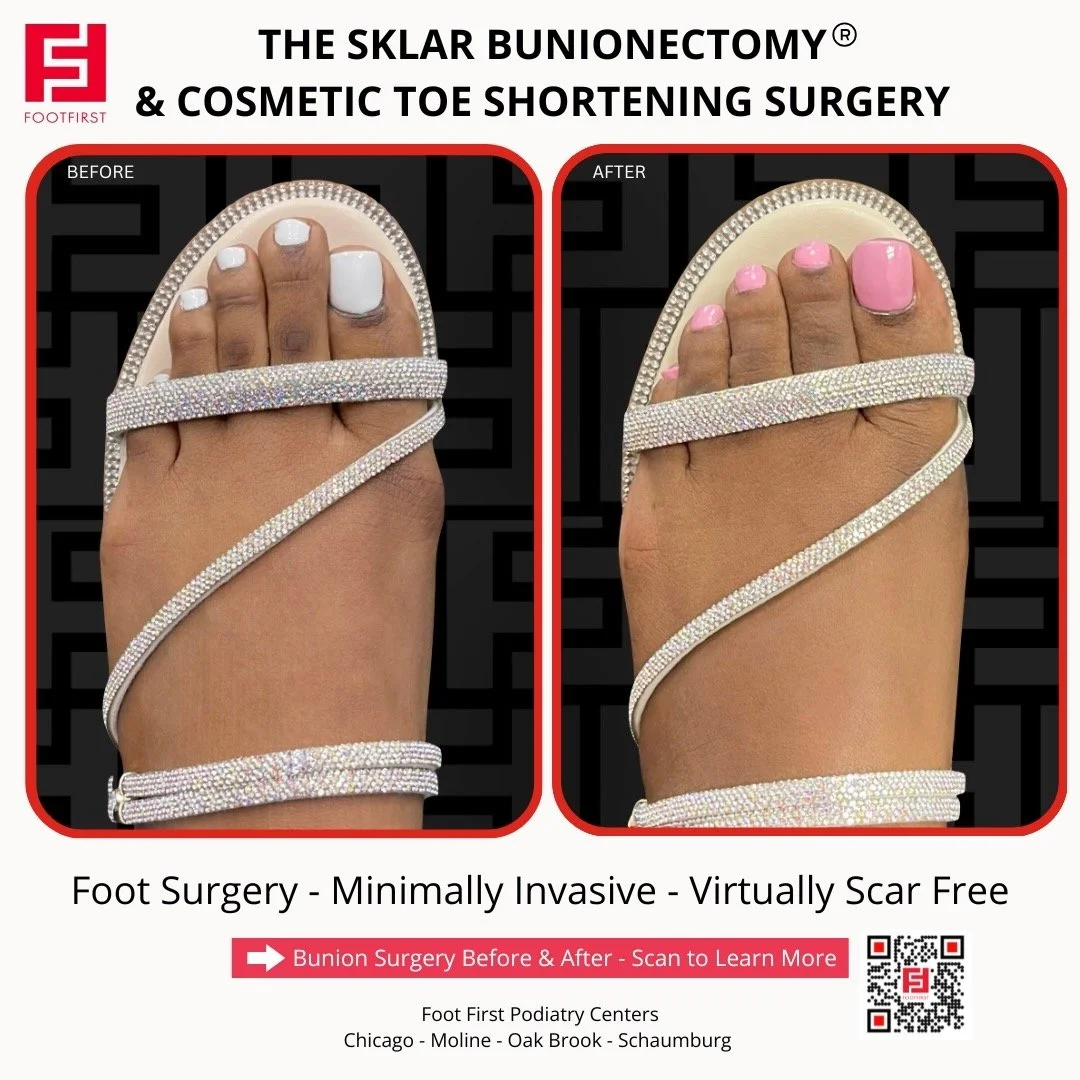
WHAT IS TOE SHORTENING SURGERY AND HOW IS IT PERFORMED?
Toe shortening surgery is an outpatient procedure that reduces the length of an excessively long second, third, or fourth toe by removing a carefully determined segment of bone.
Once the appropriate amount of bone is removed, the toe is realigned and stabilized so the bone can heal in its corrected position.
Traditional surgical methods may use an external K-wire that extends through the tip of the toe to maintain alignment during healing.
At Foot First Podiatry, our doctors utilize precision bone-sculpting techniques and hidden internal fixation rather than leaving an exposed wire protruding from the toe. Our approach is designed to achieve structural balance and aesthetic proportion while providing internal stability during the healing process.
WHY DO PATIENTS HAVE TOE SHORTENING SURGERY?
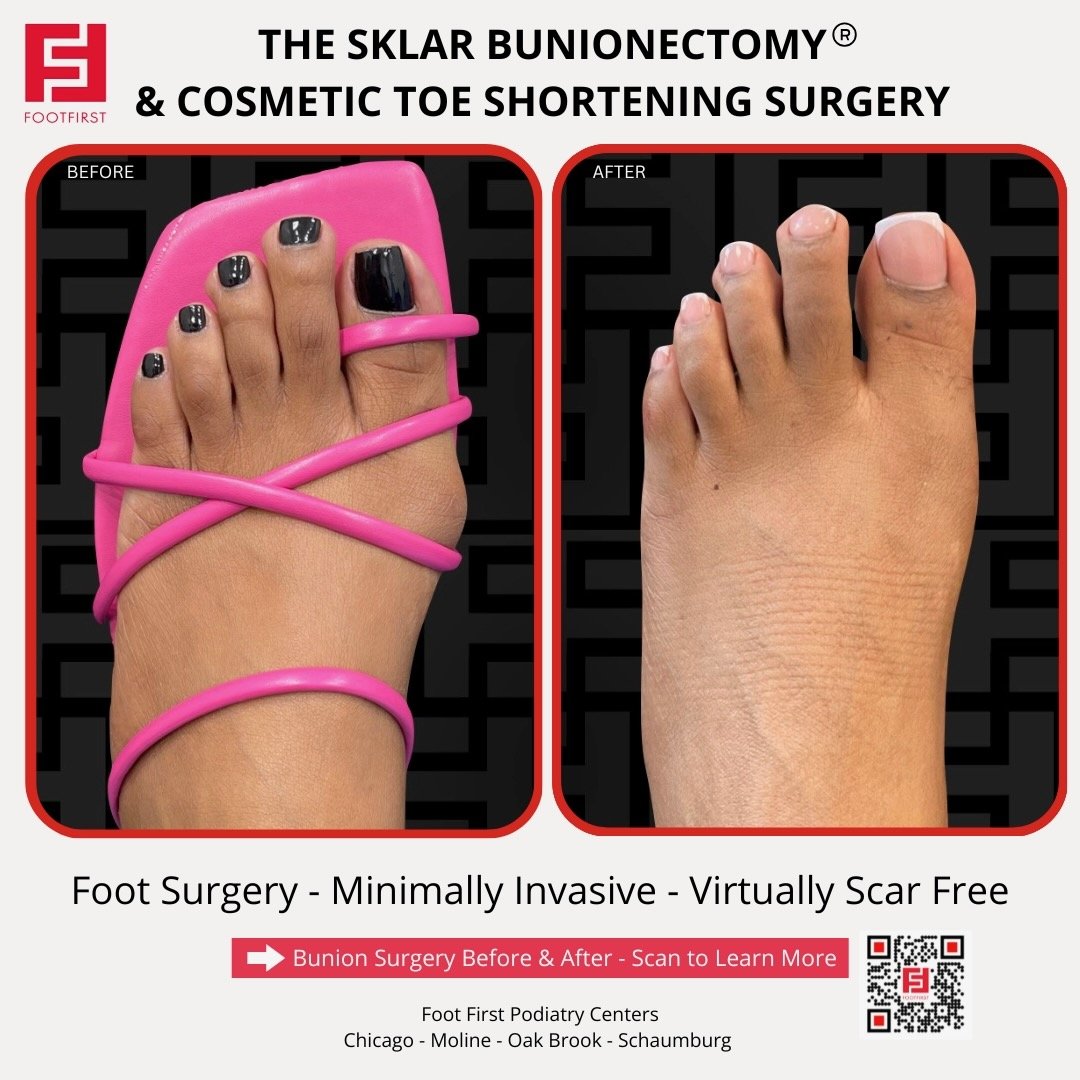
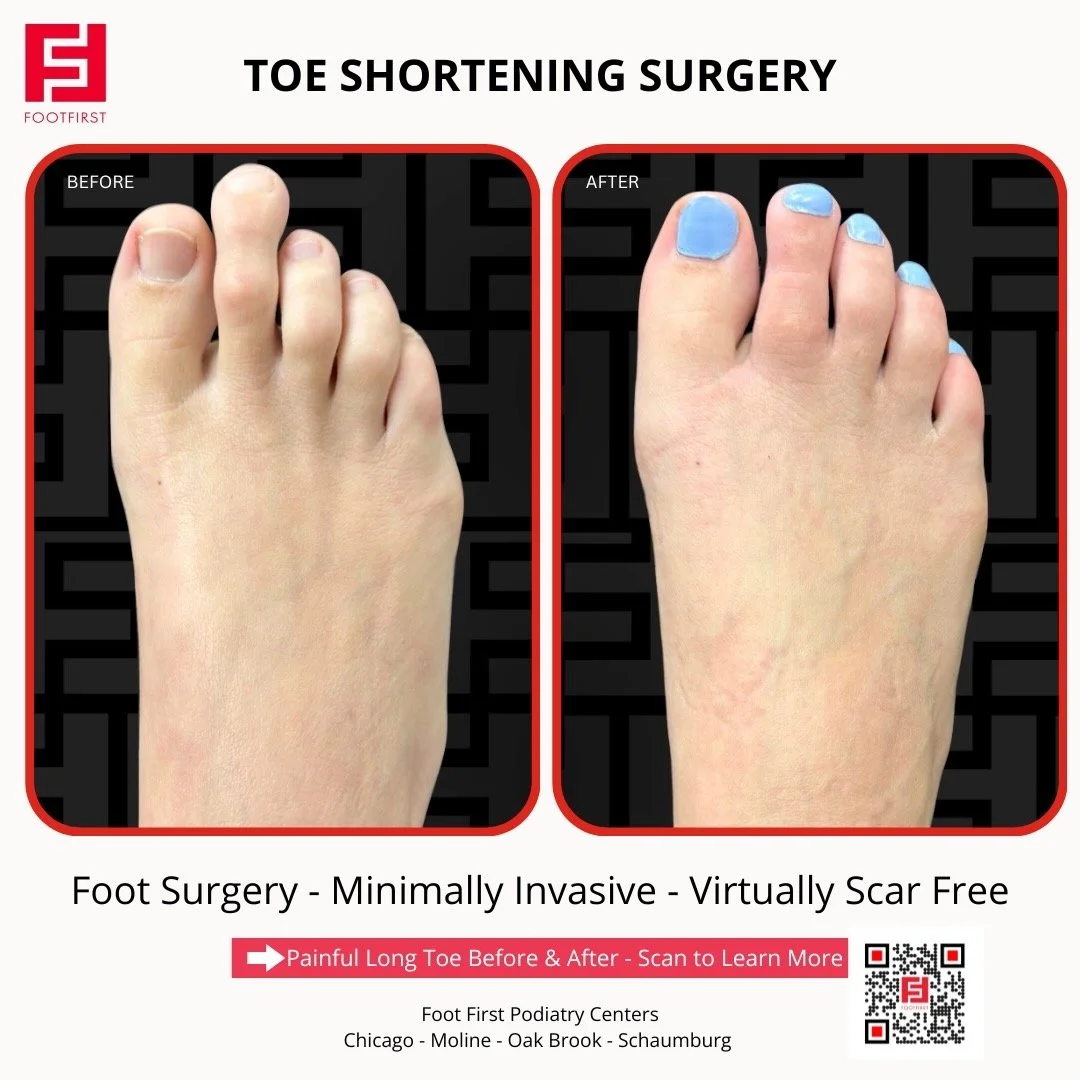
Patients may choose toe shortening surgery to address pain, shoe irritation, corns and calluses, structural problems, or concerns about the appearance and proportion of an overly long toe.
When a toe extends beyond the surrounding toes, it may repeatedly press against the end or top of a shoe. Over time, this can contribute to painful friction, irritation, corns, calluses, toe deformity, and difficulty wearing certain types of shoes.
An unusually long second toe is sometimes associated with what is commonly called Morton's toe.
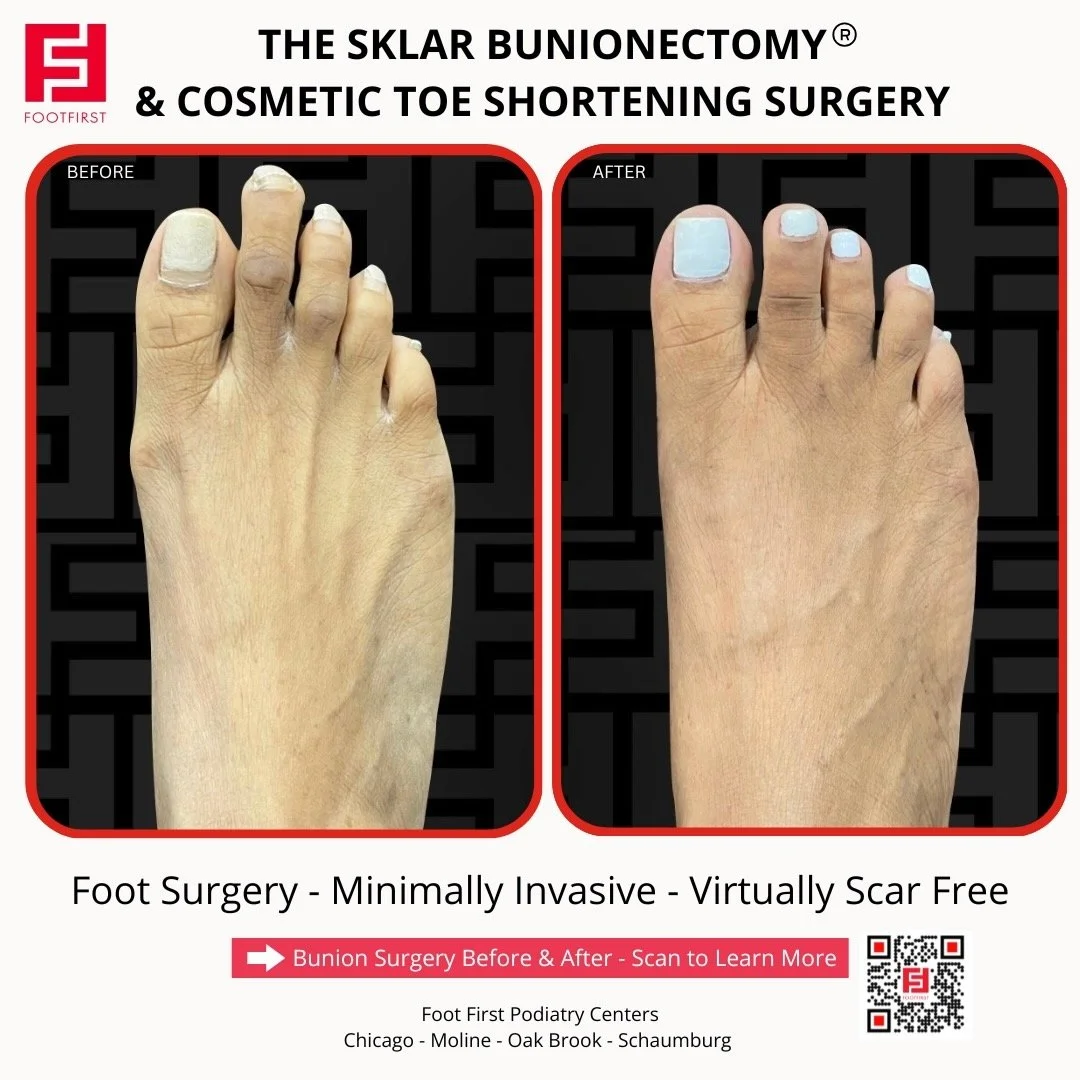
At Foot First Podiatry, we evaluate both biomechanical function and cosmetic harmony. The amount of shortening is customized according to the patient's anatomy, symptoms, and aesthetic goals while working to restore a natural, proportionate “rainbow curve” across the toes.
WHAT IS THE DIFFERENCE BETWEEN INTERNAL K-WIRE FIXATION AND EXTERNAL K-WIRE FIXATION FOR TOE SHORTENING?
The primary difference is where the fixation pin is positioned during healing. Traditional K-wire fixation leaves the wire exposed extending outside the tip of the toe, while the Foot First approach keeps the K-wire fixation hidden under the skin during the healing process.

Foot First Podiatry’s hidden internal K-wire fixation keeps the wire protected beneath the skin during healing, compared with traditional external K-wires that remain exposed through the tips of the toes. | Foot First Podiatry
With traditional external K-wire fixation, for the first 8 weeks a thin metal wire remains exposed through the end of the toe while the bone heals. The exposed wire may catch on things requiring the patient to remain in a surgical shoe or other protective footwear until the wire is removed.
At Foot First Podiatry, we use hidden internal fixation. The K-wire remains completely inside the toe and under the skin, stabilizing the surgical correction while the shortened bone heals. Since the wire is under the skin, it won’t catch on anything allowing the patient to wear a gym shoe at the third post-operative week.
WHAT IS THE RECOVERY TIMELINE FOR TOE SHORTENING SURGERY?
Recovery varies depending on the number of toes treated, whether additional procedures are performed, and each patient's individual healing response.
At Foot First Podiatry, our internal fixation is designed to protect and stabilize the surgical correction while the bone heals. Most patients do not require a cast or crutches and can put weight on the foot in a protective surgical shoe during the early stages of recovery. Patients are encouraged to take it easy, limit the amount of time spent on their feet, and follow their individualized post-operative instructions while healing begins.
As recovery progresses, most patients can transition into a supportive gym shoe around 2 to 3 weeks post-operatively. The internal K-wire remains protected inside the toe during this time and is typically removed at approximately 8 weeks.
Returning to a gym shoe does not mean the foot has completely healed or that all normal activities should immediately resume. Bone and soft-tissue healing continue, and activity is gradually increased as recovery progresses.
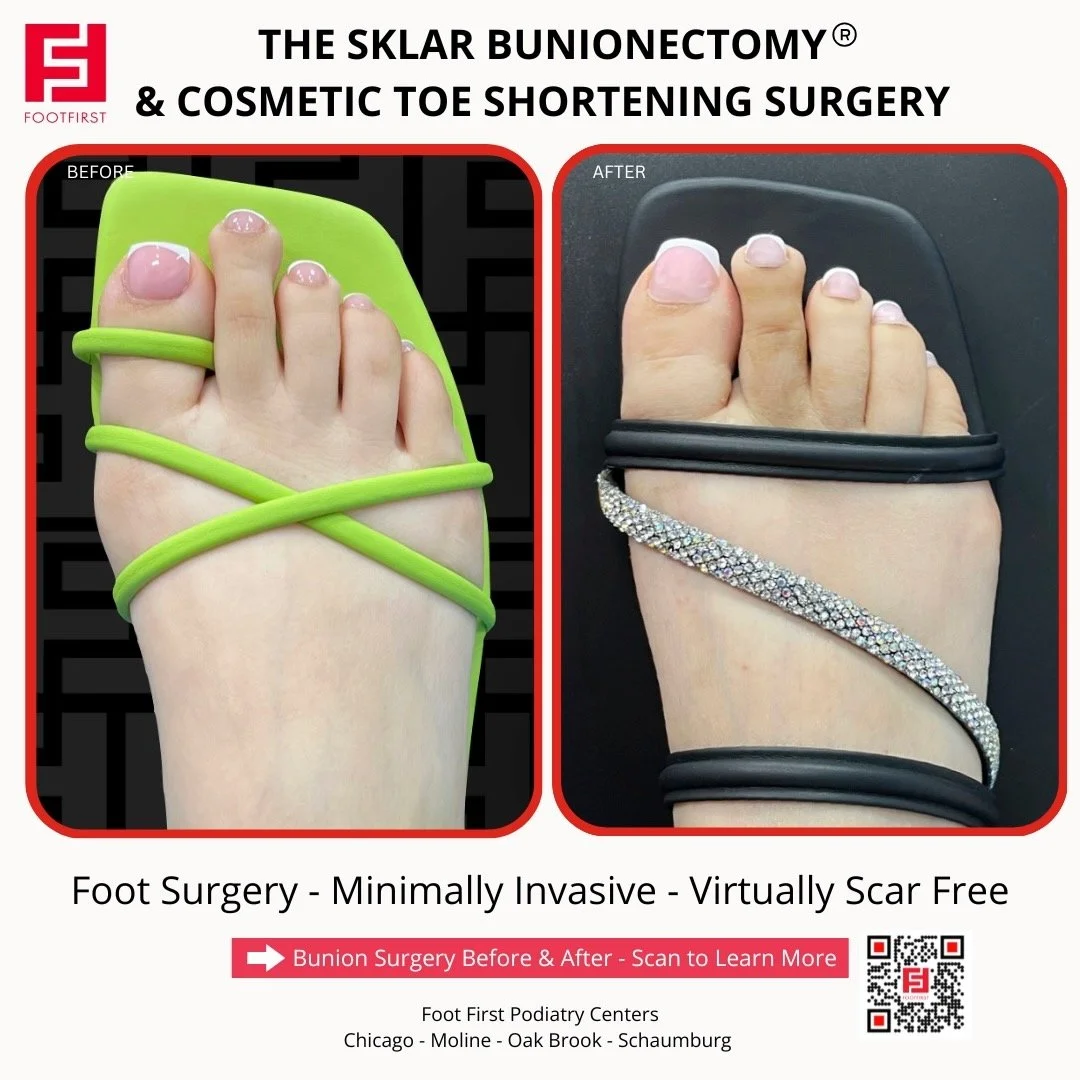
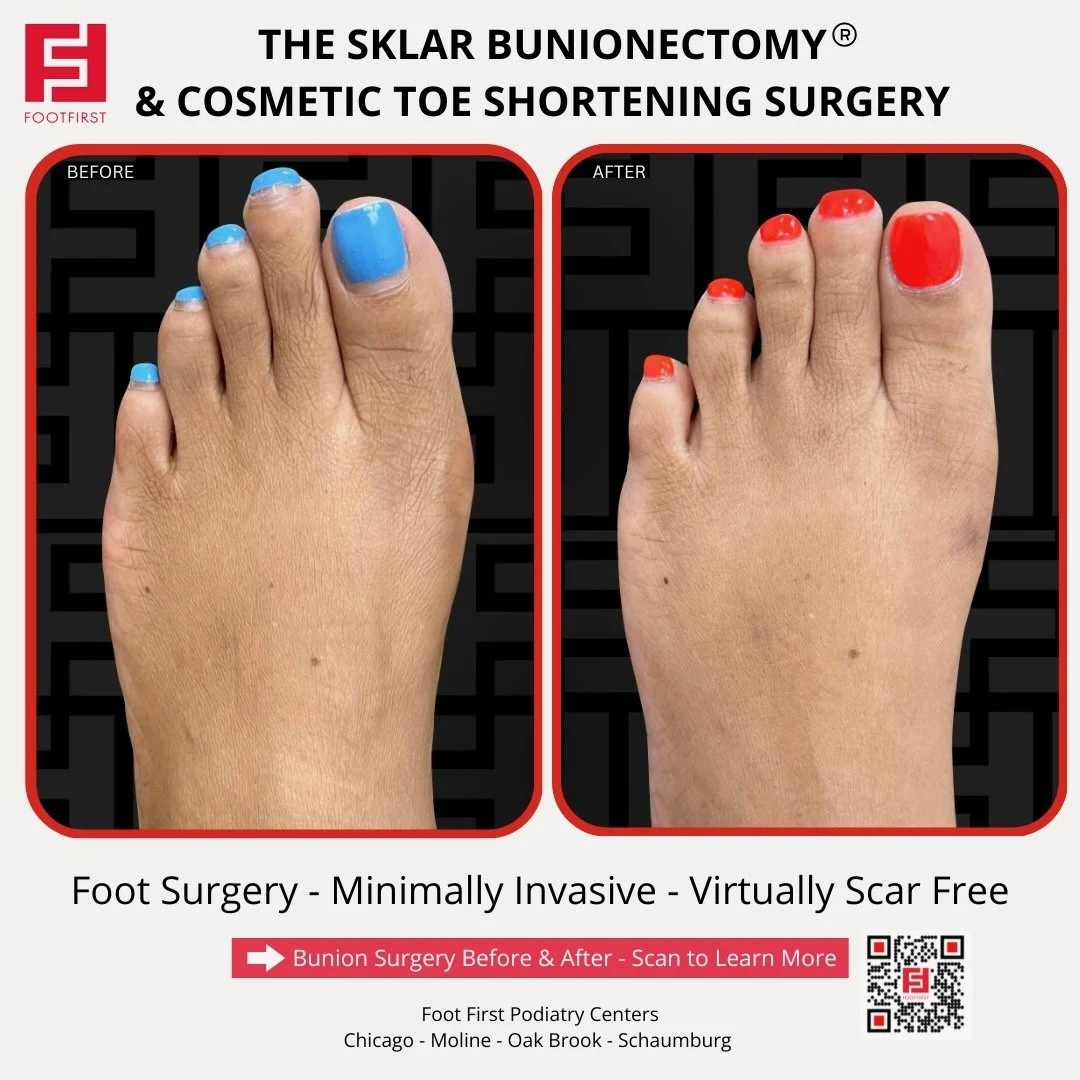
Swelling and the cosmetic appearance of the toes also continue to evolve over time. Significant aesthetic refinement is often seen around four months, with the final result continuing to mature over approximately 6 to 12 months.
YOUR AESTHETIC EVOLUTION
Although you may be walking and wearing a gym shoe relatively early in recovery, your toes will continue to change as swelling resolves and the tissues heal.
Patience is an important part of the recovery process and achieving the final cosmetic result.
WILL I STILL BE ABLE TO MOVE MY TOES AFTER TOE SHORTENING SURGERY?
Can you move your toes after toe shortening surgery? Learn what to expect after surgery and why toe movement depends on the specific procedure performed. | Foot First Podiatry
The amount of toe movement after toe shortening surgery depends on the specific procedure being performed.
Patients often ask whether shortening the bone and stabilizing it means that the toe will be permanently fused and unable to move.
Bone healing and joint fusion are not necessarily the same thing. Toe shortening involves removing a carefully determined portion of bone to achieve the desired length and stabilizing the correction while the bone heals.
Depending on the condition of the toe and the correction required, some joints may remain mobile, while certain procedures may require a joint to be fused for proper alignment and stability.
At Foot First Podiatry, each toe is evaluated individually. Our goal is to achieve the best possible combination of length, alignment, stability, function, and aesthetic proportion based on your particular foot and the procedures required.
During your consultation, your doctor will explain which procedure is recommended and what you can reasonably expect regarding toe movement after surgery.
WILL TOE SHORTENING SURGERY LEAVE VISIBLE SCARS?
At Foot First Podiatry, our specialized toe shortening technique is designed to make scarring as inconspicuous as possible.
Rather than placing the incision directly on top of the toe, our doctors strategically place the incision underneath the toe within the natural joint crease, allowing the incision line to heal within the bottom skin fold where it is much less visible.
Combined with plastic surgery closure techniques and fine-gauge subcuticular sutures, this approach is designed to minimize visible scarring and allow the incision to blend naturally into the crease of the toe as it heals.
For many patients, the healed incision can become extremely difficult to see over time, helping preserve the smooth, natural-looking appearance of the toe.
CAN MULTIPLE TOES OR BOTH FEET BE SHORTENED AT THE SAME TIME?
Yes. Multiple toes, and in some cases both feet, can be treated during the same surgical session. Whether this is an option depends on the individual patient and their specific circumstances.
At Foot First Podiatry, our doctors routinely perform multi-digit toe shortening procedures and may perform bilateral surgery when appropriate for the individual patient.
Treating multiple toes or both feet during one surgical session can consolidate the surgical and recovery process rather than requiring separate procedures at different times.
Whether this approach is appropriate for you depends on your anatomy, overall health, the procedures required, and your individualized treatment plan.
CAN TOE SHORTENING BE COMBINED WITH BUNION OR HAMMERTOE SURGERY?
This patient’s surgical plan combined toe shortening with additional forefoot corrections to improve overall alignment, proportion, and balance—all during the same surgery. | Foot First Podiatry
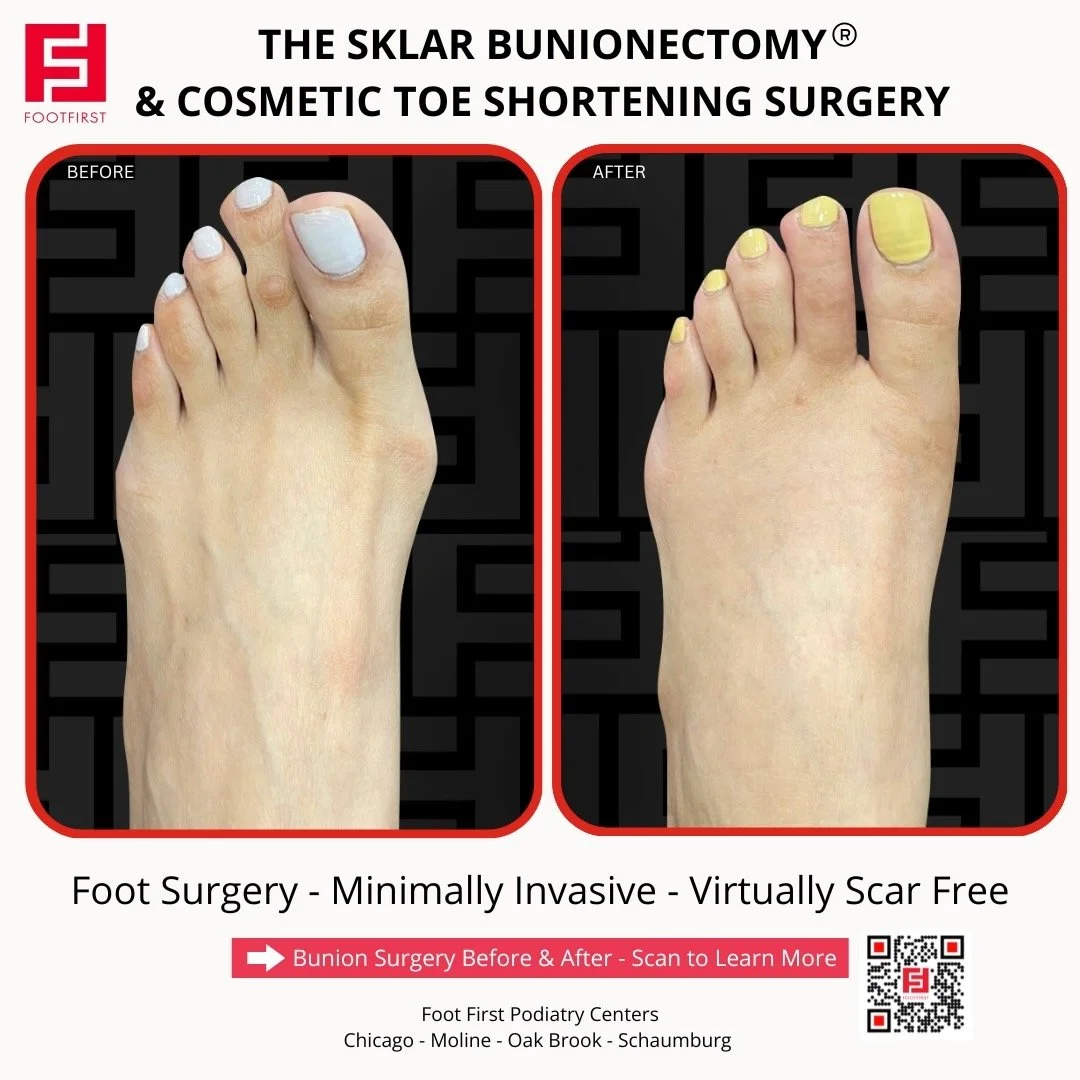
Yes. Toe shortening can be combined with bunion surgery, hammertoe correction, toe straightening, and other forefoot procedures when appropriate.
Many patients don't have just one concern. A long toe may exist along with a bunion, hammertoe, crooked toe, painful corn, tailor's bunion, or another structural problem.
Depending on the individual foot, toe shortening may be combined with procedures such as:
Hammertoe correction
Toe straightening
Other forefoot procedures
At Foot First Podiatry, we look at the entire forefoot rather than one isolated toe. When appropriate, combining procedures allows us to address alignment, proportion, function, and the overall appearance of the foot within one surgical plan.
HOW DO I KNOW IF TOE SHORTENING SURGERY IS RIGHT FOR ME?
The best way to determine whether toe shortening surgery is appropriate is to have your foot structure, symptoms, toe length, alignment, and individual goals evaluated by an experienced foot surgeon.
No two feet - or patients - are exactly alike. Some patients are primarily bothered by pain or problems wearing shoes, while others are concerned about the appearance and proportion of their toes. Many patients have a combination of functional and cosmetic concerns.
At Foot First Podiatry, your treatment plan is based on your feet, your symptoms, your lifestyle, and your goals.
Want to Learn More About Toe Shortening Surgery?
For a closer look at the procedure, recovery timeline, and cosmetic results, read our Toe Shortening Surgery in Chicago: Benefits, Recovery and Cosmetic Results blog.
READY TO LOVE YOUR FEET AGAIN?
If long or disproportionate toes are causing pain, creating problems with shoes, or affecting how you feel about the appearance of your feet, toe shortening surgery may be an option.
The doctors at Foot First Podiatry will evaluate your foot structure, toe length, alignment, symptoms, and cosmetic goals to determine the appropriate treatment plan for you.
Whether you need toe shortening alone or a combination of procedures to address bunions, hammertoes, crooked toes, painful corns, or other forefoot concerns, our goal is to restore both function and aesthetic balance.
READY TO TAKE THE NEXT STEP?
Schedule an in-person consultation if you're in the Chicago area, or a virtual consultation if you're out-of-state. Foot First Podiatry welcomes patients from Chicago and the surrounding suburbs, Moline (the Quad Cities), as well as across the U.S. and internationally.
Discover how toe shortening surgery can improve comfort, shoe fit, and confidence because at Foot First Podiatry, we’re Fixing Feet Beautifully®.